2022年9月29日星期四

Die Cutter vs Digital Cutter: Which One to Choose?

One of the most common questions in this period of our lives is whether it is more convenient to use a die-cutting machine or a digital cutting machine. Large companies offer both die-cutting and digital cutting to help their customers create unique shapes, but what the difference is between them is not clear to everyone.


For most small companies without such solutions, it's not even clear which solution they should purchase first. As experts, we often find ourselves in the uncomfortable position of having to answer this question and provide advice. Let's first try to clarify the meaning of the terms "die-cutting" and "digital cutting".


What is die-cutting?

In printing, die-cutting provides a quick and inexpensive way to cut large quantities of print into the same shape. Artwork is printed on square or rectangular material (usually paper or card stock) and then placed in a machine with a custom "die" or "punch block" (a wooden block with a metal blade) that is bent and folded into the desired shape). As the machine presses the sheet and dies together, it cuts the shape of the blade into the material.
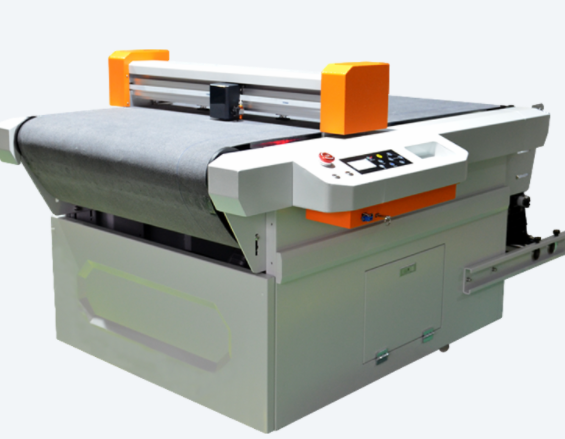
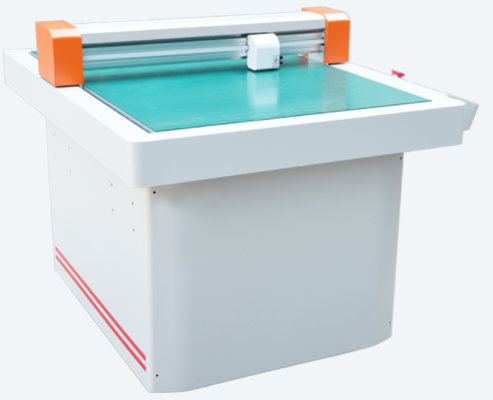
 Flatbed Digital Cutter

 Flatbed Digital Cutter


What is digital cutting?

Unlike die cutting, which uses a physical die to create a shape, digital cutting uses a blade that follows a computer-programmed path to creating the shape. A digital cutter consists of a flat table area and a set of cutting, milling, and scoring attachments mounted on an arm. The arm allows the cutter to move to the left, right, forward and backward. A printed sheet is placed on the table and the cutter follows a programmed path through the sheet to cut out the shape.


Which is the better option?

How do you choose between two cutting solutions? The simplest answer is, "It all depends on the type of job. If you want to cut a large number of small items printed on paper or card stock, die cutting is the more cost-effective and time-saving option. Once the die is assembled, it can be used over and over again to create a large number of the same shapes - all in a fraction of the time of a digital cutting machine. This means that the cost of assembling a custom die can be offset by using it on a large number of items (and/or reusing it in the future for additional print runs).


However, if you are looking to cut a small number of large format items (especially items printed on thicker, tougher materials), a digital cutter is a better choice. There's no need to pay for custom tooling; plus, you can create more complex shapes with digital cutting.
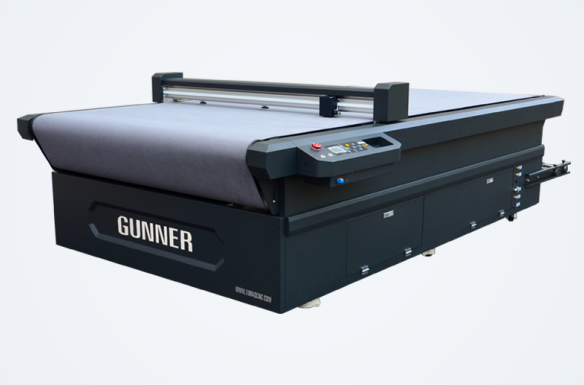
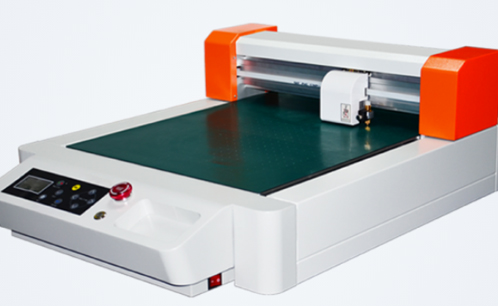
Flatbed Digital Cutter

Flatbed Digital Cutter


According to market research and industry journals, the printing market is experiencing a period of high growth in the digital sector. This is mainly due to a sharp decrease in the number of orders, but a significant increase in the variety of demand.


Typesetting is increasingly faced with the demand for small quantities, custom jobs, fast delivery, and competitive prices, which are not suitable for offset printing and die-cutting processes.


From this assumption, we come to the question, what should be done to meet this demand? My personal interpretation is to equip yourself with a "smart" product that can meet quality, versatility, and fair productivity.
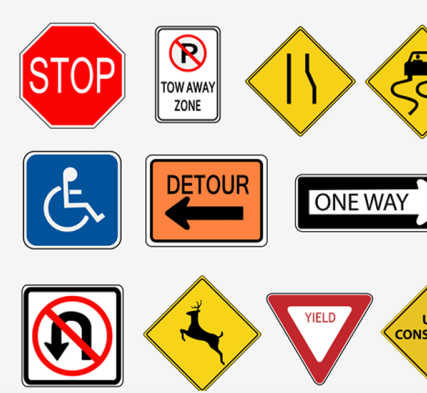
Print Media

Print Media


Every manufacturer claims to have the highest quality products, so the next question is, what are the parameters that guide our judgment? Reputation in the marketplace is certainly an important factor, as is value for money, but I suggest considering other aspects: the actual cost of use, available support, additional services, warranty terms, ease of use, and installation and training time.


Versatility is another important aspect that determines the range of work that can be performed, the types of materials that can be processed, and the longevity of the investment. This last aspect is important because, given the hypothetical lease, the machine must meet its needs for a period of at least as long as the lease.


Finally, your new equipment should have a fair production capacity that can meet the actual demand - not just expectations.


 Read More


2022年9月10日星期六

What Drive Motor Should Your Cutter Have?

Choosing your first vinyl cutter is one of the most important decisions facing an aspiring sign maker. A professional quality plotter can make your dream come true.


The wrong equipment decision can lead to frustration and failure. The most common startup sign store mistake is to buy based on speed, strength, and price alone.


So what are the criteria for making this important decision? What drive motor should your cutter have? How important is tracking? Do you need contour cutting of the printed image? What other features do you need? What about technical support?


To provide these and other answers, we humbly present this guide to choosing your first vinyl cutting machine.


Vinyl Cutter

Vinyl Cutter


Drive Motor: Stepper or Servo

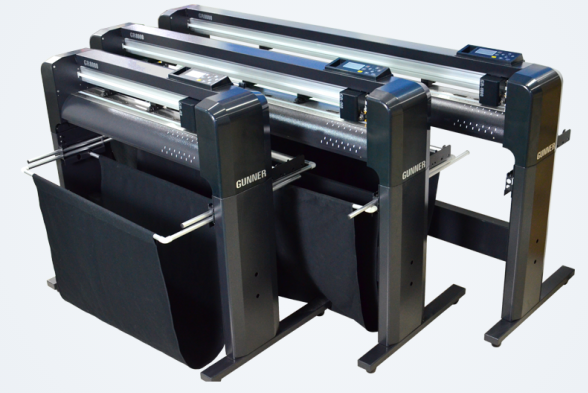
The engine of a vinyl cutter is its drive motor. The drive motor powers the grinding wheel, which advances and retracts the media, and moves the blade across the platen. The two types of drive motors used are mechanical stepper motors and digital servo motors. As the name implies, mechanical stepper motors are driven by physical gears and move in small increments or steps. This is an old and familiar technology whose main advantage is economy. The disadvantages are mechanical noise - which can sometimes be very harsh - and a very small loss of accuracy in the graphics. Large images can be cut precisely, but for characters smaller than half an inch, the physical size of the gears can prevent the machine from drawing a smooth path. This can result in jagged lines that look pixelated, rather than smoothly curved.


Stepper motors are more economical, allowing manufacturers to produce usable vinyl cutters in a more economical manner. Most entry-level plotters use this older, simpler mechanical drive system, and as in most cases, there are differences in the quality of stepper-driven tools. Some are quieter and more precise than others.


 Motor


In tools driven by digital servo motors, the digital encoder converts the software's commands to 1 and 0. The result is the smooth, precise motion of the drive motor and cutting head. This provides three advantages. The lack of mechanical gears makes these machines quieter in operation. More importantly, the digital directional motion allows the tool to turn and pivot precisely along a smaller path. Letters as small as 1/8"* can be cut with the same accuracy as larger characters. Attempting to cut characters that small with a stepper-driven cutter can result in rough edges, which often does not satisfy the requirements of discerning customers.


Another benefit of digital servo motors is superior tracking. Tracking is the ability of the cutter to maintain a straight path along the length of the vinyl. Digital servo-driven cutters typically track ten times better than stepper cutters, so digital servo cutters are a better choice for both very large and very small graphics.


Looking for an affordable vinyl cutter? Whether you’re looking for a vinyl printer cutter package, a commercial vinyl cutting machine, or an entry-level vinyl graphics cutter, we have it for sale! We will be happy to help you out!


 Read More

2022年8月29日星期一

Benefits of Digital Flatbed Cutters

This digital flatbed cutter uses high-frequency vibration cutting up and down the blade, back and forth, left and right CNC movement, tens of thousands of vibrations per minute to achieve the cutting effect, fast cutting speed, environmentally friendly processing, suitable for carbon fiber, glass fiber, fiber wool, prepreg, aramid, ceramic fiber, cloth, silk circle, leather, felt, carpet, acoustic cotton, silicone, rubber, KT board, and other non-metallic flexible materials.


The finished product cut by a flatbed digital display cutting machine is also clean and smooth at the edges, and the cut sheet is accurate in size, odorless, and more environmentally friendly, with a full range of soft and hard materials. Its cutting speed is twice as fast as the rotary knife, and the equipment is widely used, such as the garment industry and advertising industry. It is also the first choice of many enterprises.


The Digital Flatbed Cutter is the perfect solution for prototyping and low-volume production of rigid materials without the use of cutting dies. It eliminates media waste for rigid materials and also reduces handling time with Graphtec's precision cutting and commitment software. USB operation also makes it easy for users of all skill levels to handle materials.

Gunner Flatbed Digital Cutter


Now, will discuss the main benefits of the Digital Flatbed Cutter!


Perfect for short-run production

Very short set-up time and you don’t need to wait for a die

Extraordinary throughput and speed

A wide range of versatile tools allows you to expand your offerings


The flatbed tool is designed to provide a solution for high-speed precision cutting. It allows us to serve our customers with faster and more professional output. The following are just a few of the many custom products we cut with our flatbed cutters.

 Flatbed Digital Cutter


Here we will guide you through two market segments and explain how to choose the right felt conveyor.


Cutting pads

Signs and displays


If you're running an advertising sign and display manufacturing business, flatbed digital cutters are now an inevitable productivity tool for getting your job done. There is a large amount of material with print that needs to be cut and routed, such as vinyl, magnetic, PET film, PVC film, PVC foam of different densities (e.g. Forex), plastic and aluminum sandwich panels (e.g. Dibond), acrylic and soon. Some are rolls, some are paper, some print precisely, and some are simple. The surface of the bed is sure to be touched and harmed as the blade cuts through most of the material pressed into the bed by the vacuum system. This requires a flat surface and has


- Minimal thickness error

- Perfect flatness

- Cut resistance

- Good abrasion resistance - Good

good air permeability

- Flexible enough to accommodate different turning radii

- Virtually slag-free


To order these flatbed digital cutters, all you have to do is visit gunner-cnc.com, where we not only offer a wide range of flatbed digital cutters but also sell a variety of vinyl cutters and plotters. This one-stop store gives you everything you need to upgrade your store with efficient, reliable flatbed digital cutters. Contact Gunner today to learn more about the best flatbed digital cutter for 2022.

2022年8月18日星期四

Choosing the Best Cutting Plotter

Plotter technology is advancing at an amazing rate and sometimes it can be hard to keep up. If you are moving from hand cutting to plotters, it is important to do some research and determine the best options available on the market today. If you want your shop to be as efficient and effective as possible, then it's important to choose the right plotter. Fortunately, Gunner offers a wide range of options, allowing you to make the best choice for your specific needs. 


How does the plotter system work?

Using a plotter, you can cut patterns for automotive window film, PPF, vinyl, and more. This fast, accurate process allows you to handle more customers per day and maximize profitability. Gunner vinyl cutters are capable of cutting PPF up to 59 Mil thick and are available with 3M, LLUMAR pattern software.


A plotter is really a combination of two elements: the plotter machine itself and the plotter software. To use these two elements effectively, you will need.


Internet

Plotting software

Plotter

Window film, PPF, or vinyl

Vehicle for mounting the pattern

Applications of Gunner GR8000 Series Vinyl Cutter


The process is actually quite simple.


Login to your plotter software

Select the make, model, and year of the vehicle you are using

Select the windows or areas you need to install

Customize your pattern, if necessary

Load the desired film, PPF, or vinyl into the plotter

Turn on the plotter and test the blade

Start cutting your pattern

Install the film as usual


Choose the best plotter

Although the process of using a plotter is simple, you can simplify the process by choosing the right plotter. Some plotters are simpler to use and more suitable for novices. Others are designed for those who are already used to using a plotter. In addition, you can choose a plotter that matches your budget, which can help you make a confident investment in your business without breaking the bank. So what are the best plotters for 2022?


Vinyl Plotter

 Vinyl Plotter

Gunner GR8000 Series Vinyl Cutter

As Gunner's elaborate creation, the GR8000 series vinyl cutter fully embodies superior stability, high precision, high cutting/plotting speed, extra-long distance linear tracking capability, large cutting power, ultra-simple operation, and just a few examples of high-performance lettering machines.


GR8000 vinyl cutter ensures high returns for customers in the automotive aftermarket, wide-format signage, thermal transfer apparel, custom decals and stickers, road and traffic reflective signage, etc.


The GR8000 series vinyl cutter makes high-quality cuts on thin, thick, rigid materials such as paint protection film/PPF, window tint, high-intensity prismatic reflective sheeting, magnets, and sandblasted rubber stencils, and plain Zene-based decals.


PPF for internal and external

PPF for internal and external 

Stable and accurate tracking at 7m/23ft 

Ahead of most competitors, the GR8000 series is capable of long and stable tracking at 7m/23ft, an important feature for advanced machining, and ideal for large signage and pattern making.


8-step cutting force

Using Gunner software, users can set different colors for different cutting paths and set the machining sequence as a color sequence. This is an important feature for cutting multi-layer media, where different layers require different cutting forces.


Grating Ruler

Grating Ruler 

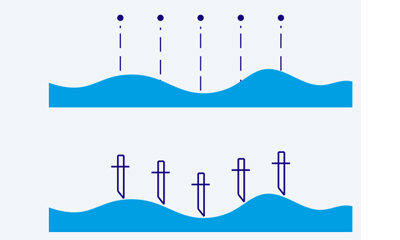
Inevitably, the material surface is not flat, so the grating ruler is used to measure the distance from the blade tip to the material surface, and the controller adjusts the cutting depth every 0.01mm. The blade then travels up and down as the material surface moves, maintaining the same depth of cut at any point along the tool path across the table. In short, the grating ruler is critical to the exact depth of cut.


To order these plotters, all you have to do is visit gunner-cnc.com, where we not only offer a wide range of plotters but also sell a variety of vinyl cutters and flatbed digital cutters. This one-stop store gives you everything you need to upgrade your store with efficient, reliable plotters. Contact Gunner today to learn more about the best plotters for 2022.

Learn More

2022年8月7日星期日

A Brief Guide To Flatbed Digital Cutter

The flatbed digital cutter is a professional cutting tool for flexible materials. It has been widely used in cutting automotive interiors, carpet mats, clothing, packaging materials, textiles, advertising materials, leather, and composite materials. The flatbed digital cutter can choose different blades according to different materials to ensure the best cutting effect. 


Next, the flatbed digital cutter supplier will share the following content with you. This article will focus on the definition, advantages, and operation of the flatbed digital cutting machine.


What is a flatbed digital cutter?

The flatbed digital cutter uses the high-frequency vibration of the blade up and down to cut, front and rear, left and right digital control movement, tens of thousands of vibrations per minute to achieve the cutting effect, fast cutting speed, environmentally friendly processing, suitable for carbon fiber, glass fiber, fiber cotton, prepreg Cloth, aramid, ceramic fiber, cloth, silk loop, leather, felt, carpet, sound-absorbing cotton, silicone, rubber, KT board, and other non-metallic flexible materials. 


The finished product cut by the flatbed digital cutter is also clean and neat, with smooth edges, and the size of the cut pieces is accurate, odorless, and relatively environmentally friendly, and soft and hard materials are available. Its cutting speed is twice that of a rotary knife, and the equipment is widely used, such as the clothing industry and advertising industry. It is also the first choice of many companies.


Gunner Flatbed Digital Cutter


What are the advantages of the flatbed digital cutter?


1. Easily solve various problems during die-cutting, such as time-consuming and labor-intensive replacement of die, reducing production efficiency; in addition, feeding system and receiving system can be added according to customer needs, which is more intelligent and labor-saving.


2. The ultra-high frequency vibration knife cutting technology eliminates the irregularity of manual cutting; it is more efficient and faster, making leather and PU cutting an artistic enjoyment.


3. The cutting speed is faster and the efficiency is higher. The frequency of the electric vibrating knife can reach 25000 times/min to provide strong support for high-speed cutting, and the speed can reach 1000mm/s.


4. Effectively solve the disadvantages of laser cutting machine scorching/odor, and more in line with environmental protection requirements; cutting carpets (with PVC at the bottom), the incision is very smooth, and will not produce black edges, burnt and other problems caused by laser cutting. Beautiful, more in line with the needs of end-users.


5. Smooth operation, fine and smooth cut, powerful function, can effectively solve various problems such as proofing.


6. The operation interface is simple and practical, easy to learn, and easy to use.


 Flatbed Digital Cutter


What should we pay attention to when using the flatbed digital cutter?


  • 1. The accuracy of the workbench. When the accuracy of the worktable is high, the blades on the worktable will cut with high precision. Of course, the accuracy is also greatly guaranteed. The height of the worktable is high or low, and subtle errors may cause a reduction in cutting accuracy and bring the factory loss. This has a particularly great impact on the quality of our materials. Where we need to consider, we must look at the whole process of cutting demonstrations to determine whether the accuracy effect is enough!


  • 2. The difference in cutting materials. Depending on the cutting material will also affect the choice of cutting blade. Similarly, the precision of cutting cloth and white cardboard is different, which is mainly affected by the thickness and hardness of the material. The thicker the material, the lower the precision and the larger the gap.


  • 3. The sharpness of the blade. The sharpness of the cutting machine blade is also an important factor that affects the cutting accuracy. When the blade is passivated, there is a lot of wear, which affects the cutting of raw materials during the cutting process and affects the cutting accuracy. The material of the blade is good, and the sharpness is very good, but the cutter can switch the blade, and choose different blades according to different materials. Regardless of the blade life, cutting accuracy, cutting speed, and cutting quality, a good blade is much higher than a poor-quality blade.

Contact Us

2022年7月18日星期一

Flatbed Plotters: What Materials They Cut?

The success and appeal of flatbed plotters have been on the rise in recent years. These cutters have many different features and are available in a wide range of formats.


Flatbed plotters are called "flatbed" because, in contrast to roller plotters, they use a beam to move the tool over the material, rather than allowing the material to move under the beam, and place the same material on a flat surface.


The main feature of these machines is that they allow the operator to cut multiple substrates without using a traditional die cutter. Thus, these machines process the raw material by giving it a defined shape. There can be precise shapes for different types of applications: depending on the capacity of each machine, the raw material can be turned into boxes, stickers, signs, or many other applications.

 Vinyl Plotter

  Vinyl Plotter

Flatbed plotters are distinguished mainly by the applications they can implement. The applications are decisive because they define the reference market for a single model.


Another essential element that helps to distinguish the type of plotter is the tools that can be installed on these machines. In fact, the tools are very important in determining the applications that a plotter can perform and how they can be performed.


People often mistakenly believe that size is the most important factor. To be honest, this is the last aspect we should consider when evaluating a plotter. First, we should make sure that the plotter is capable of handling the material we want to work with. The choice of machine size will be closely related to the size of the material to be handled and, if printing, to the capacity and maximum print size that can be achieved.


Another factor that determines the type of digital plotter is the software application. This is not because the machine does not have them, but because they are able to manage multiple file formats, which in a way will also determine the work that will be done.


If we receive a . DXF file, it is more likely that we are dealing with the world of material cutting and modeling. Finally, there are specific files from third-party programs that are not part of the machines on the market and may have proprietary formats.


Vinyl Plotter

 Vinyl Plotter

Flatbed plotters: what materials they cut

Flatbed plotters can cut different types of materials. The workability of the material is closely related to the choice of tools with which the machine is equipped.


However, flatbed plotters are often used to work with soft materials such as paper, cardboard, adhesives, fabrics, foams and all those materials that have a low resistance to processing.


When we talk about these materials, we can distinguish between those that can be cut with a drag knife, an oscillating knife or a rotary knife.


In terms of hardness, the most difficult material to cut is PVC Forex®, which is the upper limit of what a flatbed plotter can process.


Usually, the flatbed plotter not only makes the cut, but in the case of boxes, a second tool is needed to make the crease, or in the case of adhesives, a half cut. materials more suited to the signage market such as Alu-dibond, high-density Forex®, Lexan or Plexiglas, MDF, etc. require an additional cutter.


As you may have guessed, there are many options and customization possibilities for each specific business need.


2022年7月8日星期五

How To Choose A Flatbed Cutter?

The art of cutting doesn't need to be complicated, time-catching, or expensive. With current flatbed cutting machine technology, you can easily achieve a higher level of finishing. In this article, we will introduce you to the configuration of a flatbed cutter and how to choose a flatbed cutter.


The flatbed cutter is ideally suited for designer and prototyping in offset printing, digital printing, packaging industry, road sign production, stone, and glass sandblasting, and etching. Flatbed cutters use a large, flat work surface and XY cutting head for cutting, creasing, embossing, scrap stripping, and blank separation of materials such as paper, vinyl, cardboard, textiles, glass, and other materials.


Print Media

Print Media

Configuration of a flatbed cutter

The exact configuration of the flatbed cutter will vary from application to application, but relatively speaking, the elements that may be present are: flatbed cutter


  • Feeder or loader: uses a suction head or pushes the system to transport the paper from the stack to the machine feed

  • Feeder: controls each sheet and aligns it to the cutting tool using mechanical or dynamic alignment

  • Platen section: This section combines the cutting die and the cutting plate under pressure. The sheet is sandwiched between them and the sheet can be punched, creased or embossed, depending on the application or the substrate

  • Stripping section: Internal waste, and sometimes side and rear trim is removed using an upper stripping tool, central stripping board, and sometimes in lower stripping pins

  • Blank separation section: This unit pushes individual cartons from the sheet, creating a pile of flat blanks ready for further processing or for transfer to the customer. A blank separation unit has its own delivery unit

  • Delivery: On machines with no blank separation section, the delivery creates either a pile of full sheets or of blanks attached to each other by nicks.

  • Blank separation section: This unit pushes individual cartons out of the sheet to form a pile of flat blanks ready for further processing or transfer to the customer. The blank separation unit has its own transfer unit

  • Delivery: On machines without a blank separation section, delivery produces a pile of complete sheets or blanks interconnected by indentations.


Flatbed Digital Cutter

Flatbed Digital Cutter


How to choose a flatbed cutter?

Jobs come in all sizes - in all sizes - and they all require proper finishing. However, whether it's a small, complex job or one that's larger than its actual size, it takes a lot of time, effort, and skill to complete by hand. This is where a flatbed cutter can "come in handy" and save you not only valuable time but also money.


With the current technology, you can get excellent accuracy with automatic cutting systems. A flatbed cutter will be your best bet, especially if you want to cut a wide variety of substrates and applications. Gunner's range of flatbed cutter sizes can work for everyone, so how do you decide which size is best for your type of business?


Ask yourself the following questions.

What is your core business; are you focused on a specific application or as many applications as possible?

How much flexibility do you want to have in providing new applications/solutions?

What are the material sizes you handle most often?

How much money do you want to invest?

How much space do you have for a flatbed cutter?

Is there anything else you'd like to consider?

If you need personal advice to help you make a decision, don't hesitate to contact our experienced sales team.


For more information about the advantages of flatbed cutters, welcome to contact us.


Learn More

When Should I Choose A Flatbed Plotter?

You may be wondering how to determine if you should really consider   buying a flatbed plotter . These machines are an effective solution to...